
Aging eyes need more than a single nutrient or a capsule. Daily food choices, screen routines, outdoor habits, regular eye examinations, and careful supplement selection work together as a practical framework for supporting healthy vision over time. Dark leafy greens, colorful produce, and fish provide nutrients associated with eye health, while sensible screen breaks can make long workdays more comfortable. The goal is not to promise a medical outcome, but to build habits that fit real life and recognize when professional advice is needed.
Start with food before supplements
A varied eating pattern is usually the most useful starting point because it supplies several nutrients at once. The National Eye Institute highlights dark leafy greens such as spinach, kale, and collard greens, along with fish such as salmon, tuna, and halibut, as foods that fit a healthy-vision diet. Eggs, beans, peppers, citrus fruit, and brightly colored vegetables can also add variety to meals, although no single food should be treated as a complete eye-care plan. A practical weekly pattern might include leafy greens in a breakfast omelet, salmon or tuna at lunch, and beans or roasted vegetables at dinner.
- Pair leafy greens with a source of healthy fat when appropriate, such as olive oil, avocado, nuts, or seeds.
- Choose whole foods regularly instead of relying on a single “superfood.”
- Keep added sugar, highly processed snacks, and excessive alcohol from crowding out nutrient-dense meals.
Understand lutein and zeaxanthin labels
Lutein and zeaxanthin are carotenoids commonly discussed in eye-health nutrition. They appear in foods such as leafy greens, corn, peas, and egg yolks, and they are also found in many supplements. A label should be read as a complete formula rather than judged by one ingredient alone: check the serving size, the amount per serving, other vitamins and minerals, allergens, capsule ingredients, and directions for use. The presence of lutein or zeaxanthin does not automatically make a product appropriate for every person, especially when someone already takes multivitamins or has a condition requiring dietary restrictions.
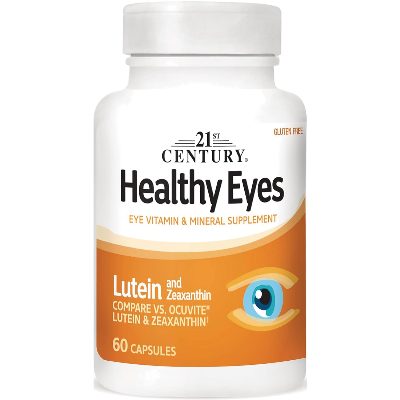
A product example is Healthy Eyes Lutein & Zeaxanthin, which lists vitamin C, vitamin E, zinc, copper, lutein, and zeaxanthin per one-capsule serving. Its label also lists ingredients such as gelatin, maltodextrin, magnesium silicate, gum arabic, silicon dioxide, cellulose, magnesium stearate, and water. Anyone avoiding gelatin or managing mineral intake should review the full package label and discuss suitability with a pharmacist or clinician rather than selecting it from the name alone.
Screen habits matter during long workdays
Long periods of close-up screen use can make people notice tired, dry, or uncomfortable eyes, particularly when blinking becomes less frequent or the screen is too bright. The American Academy of Ophthalmology recommends a 20-20-20 approach: every 20 minutes, look at something about 20 feet away for 20 seconds. A monitor placed roughly an arm’s length away, with the top of the display near eye level, can also support a more comfortable workstation. Larger text, balanced room lighting, reduced glare, and intentional blinking are simple adjustments for office workers, students, and frequent phone users.
A realistic routine is more useful than an idealized one. Calendar reminders can prompt short distance-viewing breaks during meetings or spreadsheet work, while a longer pause every couple of hours creates an opportunity to stand, walk, and change focus. Screen use close to bedtime may also interfere with sleep routines, so reducing device use before sleep can be a reasonable part of a broader evening schedule. These habits do not replace an eye examination when vision changes persist.
Common supplement myths to avoid
One common misconception is that an eye supplement can replace vegetables, fish, sleep, or routine examinations. Another is that a formula marketed for age-related concerns is automatically suitable for someone without a diagnosed eye condition. Findings from the AREDS and AREDS2 studies are specific: the formulas were designed for certain people with intermediate or late age-related macular degeneration, and they are not general-purpose products that prevent AMD from beginning. High amounts of vitamins and minerals may also interact with medicines, duplicate nutrients in other supplements, or be unsuitable for particular health conditions.
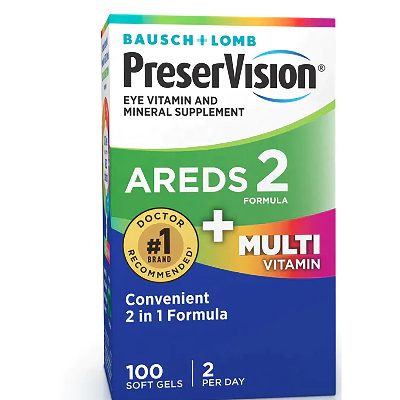
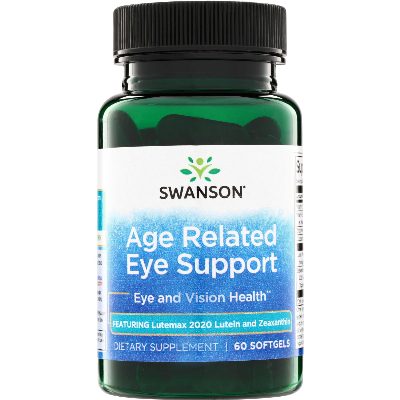
Preser Vision AREDS 2 + Multivitamin is an example of a product that should be considered in context rather than selected solely because of its name. Its provided information describes a soft-gel multivitamin formula featuring lutein and zeaxanthin, but the appropriate use of an AREDS2-style product depends on eye-disease status and professional guidance. Age Related Eye Support - Featuring Lutemax Lutein and Zeaxanthin is another example with vitamin C, vitamin E, zinc, copper, lutein from Lutemax 2020 marigold flower extract, and zeaxanthin from the same source. Package directions and a clinician’s advice should take priority.
Match the choice to the reader’s situation
The best selection depends on the reader’s needs beyond budget. Someone seeking a straightforward daily formula may compare serving size, capsule type, ingredient list, and the amounts of zinc, copper, vitamins, lutein, and zeaxanthin. A person who avoids animal-derived ingredients should inspect gelatin and soft-gel components, while anyone taking medication should ask a pharmacist about potential duplication or interactions. Adults over 50, people with a family history of retinal disease, and those who have noticed changes such as distortion, missing areas, flashes, or a sudden increase in floaters should prioritize an eye-care appointment instead of self-selecting a supplement.
- For everyday nutrition: focus on leafy greens, colorful produce, fish, and a varied meal pattern.
- For screen-heavy work: use distance breaks, comfortable viewing distance, readable text, and glare control.
- For supplement comparison: read the full label, serving size, form, and ingredient amounts.
- For diagnosed macular disease: use only a plan confirmed by an eye-care professional.
Build a sustainable eye-health routine
A sustainable plan can be small enough to follow on busy weeks: add one leafy-green meal several times a week, keep water available, take structured screen breaks, and schedule examinations according to professional advice. Supplements may have a place when a qualified professional identifies a relevant need, but they should not be treated as a shortcut or a promise of preventing normal aging. Product labels can change, so the current package should always be checked for serving instructions, ingredients, and warnings.
The most useful question is not “Which capsule is strongest?” but “Which routine is accurate, appropriate, and easy to maintain?” Food quality, screen ergonomics, sleep, physical activity, smoking avoidance, and timely medical attention form a broader foundation than any isolated product. This information is for general education and is not a diagnosis or personalized medical advice; readers with eye disease, medication use, pregnancy, or concerning vision changes should consult an optometrist, ophthalmologist, or pharmacist.
The information in this article is for reference only and does not constitute professional advice. For specific decisions, please consult a relevant professional based on your personal situation.